

The modern fork originated in Naples
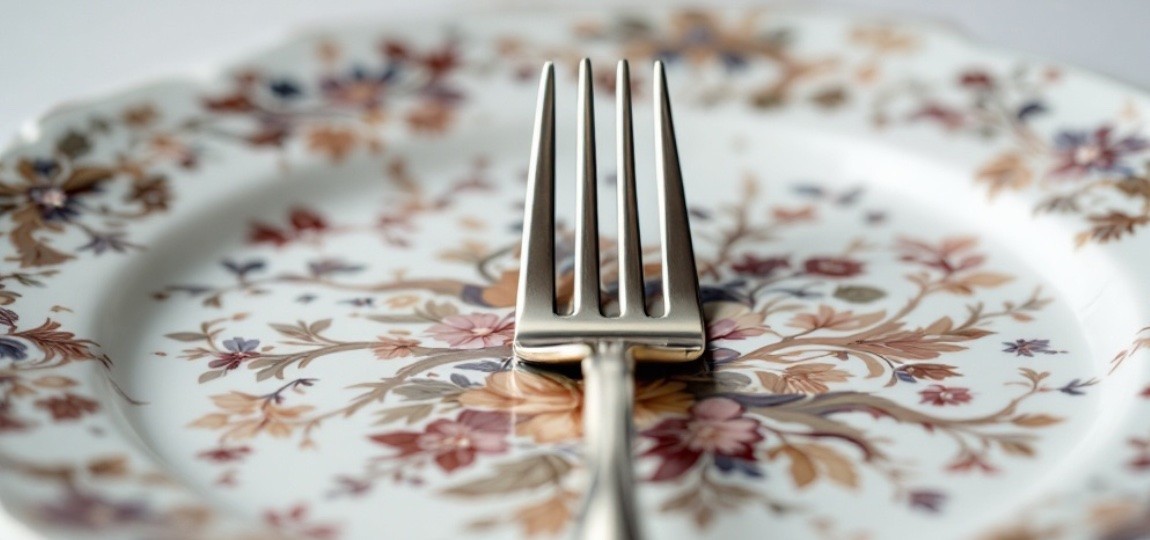
The fork we all use today is Neapolitan: a brief history of the fork
The fork we all use today is Neapolitan
But how did people eat before? They ate with their hands. It was the most natural tool humans possessed; eating with one's hands was not considered bad manners—on the contrary, it was seen as sociable and perfectly simple, and it was part of the social code of the time. In the Middle Ages, people also used bread to help them eat.
Historically, eating was done primarily with the hands—a gesture perceived as natural, sociable, and entirely in keeping with the social customs of the era. During the Middle Ages, it was also common to use bread as a dining aid.
The fork's long absence from the dining table can be explained by a specific culinary reality: until well into the Middle Ages, diets consisted largely of liquid or creamy dishes—such as soups, broths, stews, and purées—making such a utensil unnecessary.
It was ultimately in Byzantium, between the 7th and 10th centuries, that the fork first appeared. The Byzantine court introduced this unique instrument—characterized by a long handle and two tines—marking a significant evolution in dining habits.
It was a very expensive instrument, as it was made at the time from extremely rare materials, such as gold. In fact, utensils similar to forks already existed in earlier times, though they were not used for eating; instead, they served to handle food—such as for serving or turning it—rather than for actual consumption.
The use of the fork originated in the Byzantine Empire between the 7th and 10th centuries. During this period, the Byzantine court introduced this distinctive implement—featuring a long handle and two tines—marking a significant shift in dining habits.
Crafted from precious materials like gold, the fork represented a costly investment. While utensils with similar functions had existed in antiquity, their use was strictly limited to serving or handling food during cooking, rather than for direct consumption.
Upon its introduction, the two-tined Byzantine fork was reserved for the elite and members of the court. Its use served as a distinct social marker, allowing the aristocracy to assert their rank and emphasize a symbolic distance between themselves and the general population.
It was during this era that the modern fork emerged in Venice—then a major maritime trading power and a vital link between the West and the Ottoman Empire. Tradition holds that the instrument was introduced to Venice by a Byzantine princess. Initially, the two-tined fork sparked heated controversy among the public, who viewed the use of such a utensil as a display of superficial ostentation, contrasting sharply with the sacred significance attached to eating with one's hands.
Nevertheless, the innovation gradually spread across Italy, eventually reaching Naples. Throughout this process of adoption, the Byzantine fork evolved to incorporate a third tine. Introduced to France by Catherine de' Medici in 1533 and popularized during the reign of Henry III starting in 1574, the fork nevertheless took a century to become firmly established in everyday use.
Under the Bourbon dynasty, Naples emerged as a major European capital, radiating cultural, artistic, innovative, and gastronomic influence.
During this period, the court hosted annual banquets of increasing scale and sophistication. This historical context marked a significant shift in the dietary habits of the Neapolitan population: once nicknamed *Mangiafoglie* ("leaf-eaters" or vegetable eaters), the inhabitants gradually adopted pasta, thereby earning the moniker *Mangiamaccheroni* ("macaroni-eaters").
However, the growing enthusiasm for pasta—among both the general population and the court—gave rise to a major practical challenge. The cutlery of the time, particularly the standard fork, proved ill-suited and inefficient for eating spaghetti, making the experience particularly difficult.
It was in 1770 that Gennaro Spadaccini, the court chamberlain responsible for royal protocol, recognized the need for an ergonomic redesign of the utensil. Tradition credits him with the creation of the modern fork, because characterized by its four tines. Compared to earlier models, this Neapolitan version was distinguished by a shorter handle and finer tines, thereby optimizing its usability.
Over time, this design became established in Naples before gaining widespread international adoption. The utensil we use every day thus finds its roots in the Italian way of life.


Leave your comment