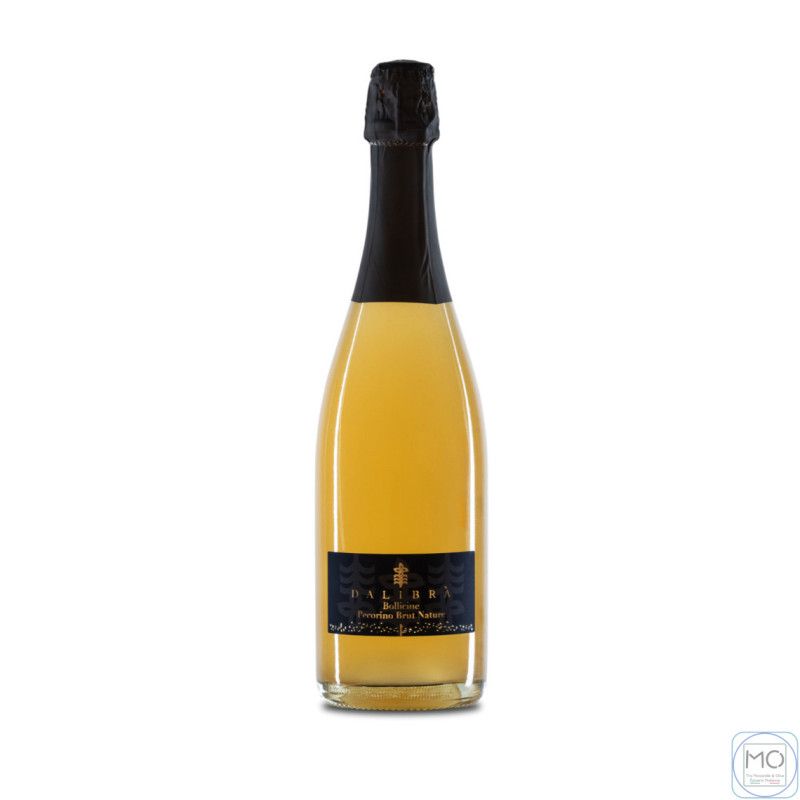
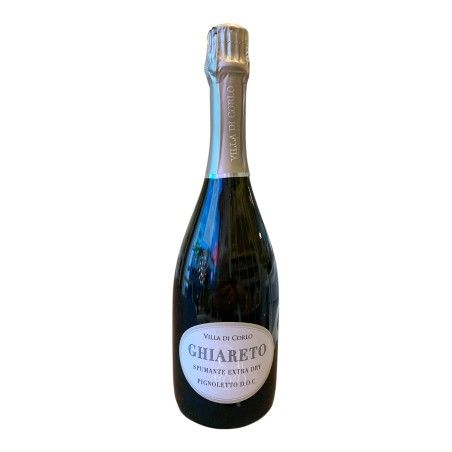
The sparkling wine making technique is based on fermentation in a tank blocked at a sugar content (cooling of the must to 6°C and 18g/l of residual sugar) that guarantees the second fermentation after bottling without the addition of sucrose. The wine referments in the bottle and the maturation of the sparkling wine occurs “sur-lie” or on its own yeasts that give a cloudy and opaque appearance, in contrast to the brilliance and luminosity of the bubbles of conventional sparkling wines.
The second fermentation in the bottle and the subsequent second fermentation occurs thanks to the natural residual sugars present in the wine and does not require the addition of sucrose as in the Charmat and Champenois methods.
Characteristics: spontaneous fermentations, without added sulphites, without disgorging with lees, natural tartaric stabilization
Grape variety: 100% Pecorino
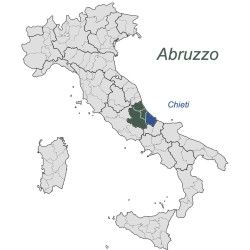
A native white grape variety of the Marche and Abruzzo regions. Already widespread before phylloxera, during the twentieth century it was gradually abandoned to make room for varieties such as Trebbiano, which was more productive. Also called “uva dei pecorari” (shepherds’ grapes) because of the grapes considered to be of little value, suitable for humble people like “i pecorari” (a derogatory term).
In the vineyard: Grown using the Abruzzo pergola system at an altitude of about 450 m above sea level on land exposed to the south – south/east, which is mainly calcareous and rich in skeleton. Management of the vineyards according to the organic production method Reg. (EC) no. 834/2007
Harvest: Harvested by hand and in 20 kg boxes when the grapes have reached full ripeness, generally between the end of September and the first ten days of October.
In tasting:
Color: pale straw yellow, impenetrable to the eye due to its natural cloudiness. Fine and persistent perlage.
On the nose: fruity and citrus notes emerge, with a vague memory of yeasts.
In the mouth: decisive freshness and a long and convincing finish with a pleasant flavor.
Pairings: Elaborate first courses, white meats, fish and shellfish.
In service: You can pour the wine into the glass slowly so as not to cloud it or put the yeasts back into suspension by turning the bottle upside down. However, it is important to use "the lees" which is the part that gives depth, thickness and distinctiveness to the wine (terroir and grape variety).
Servicing temperature: 6-8°C

 English
 Français
 Italiano
 Deutsch